
Case Study - Giving a Community Think Tank a Website That Shows Its Work
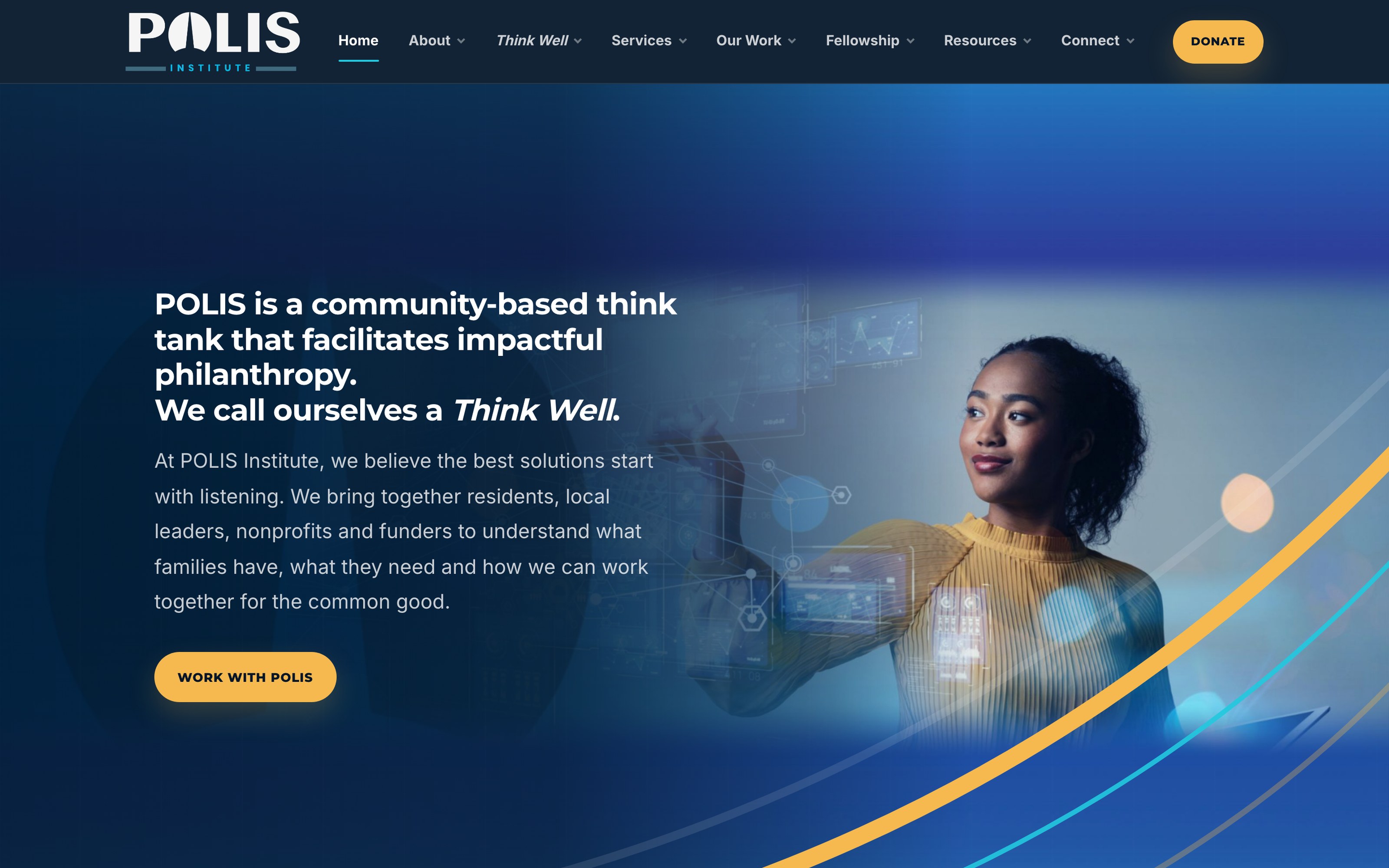
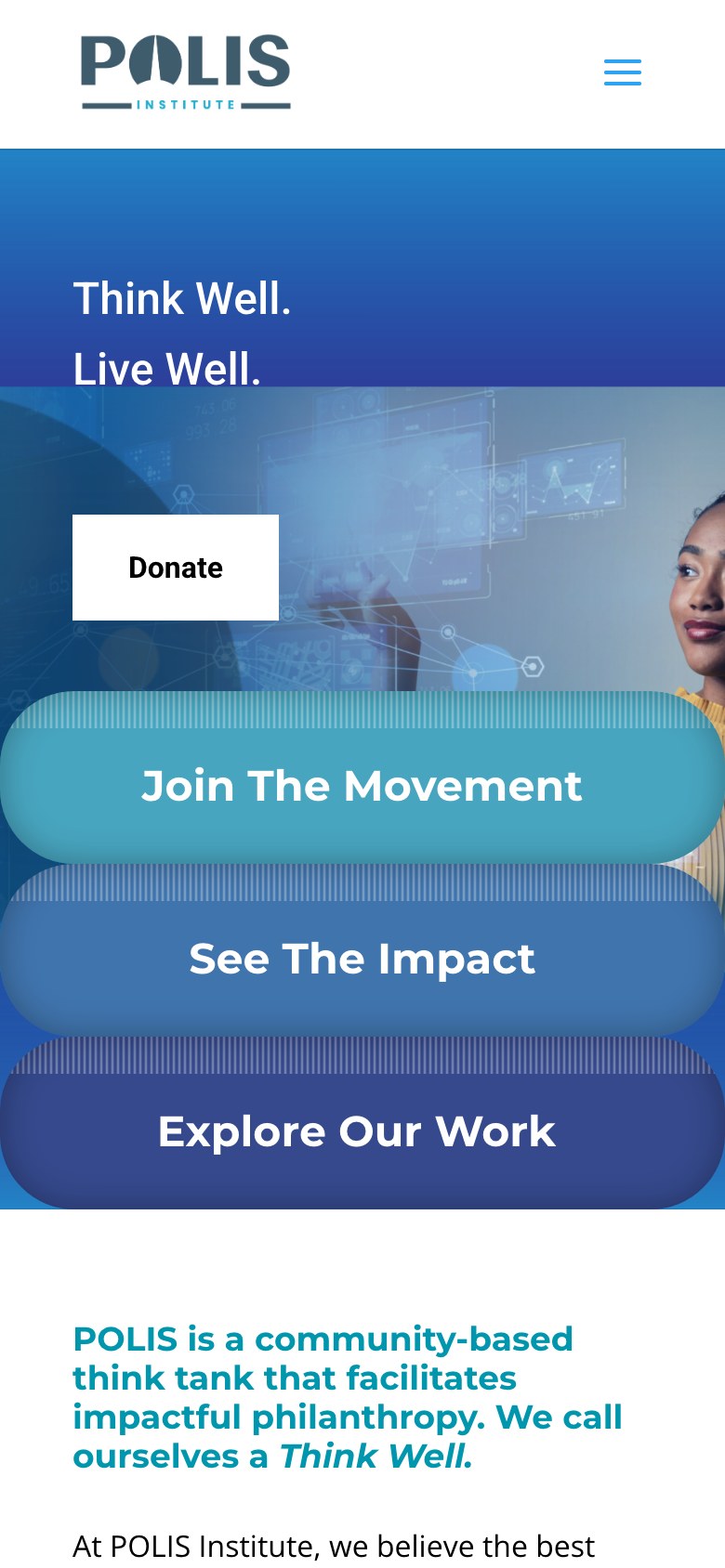
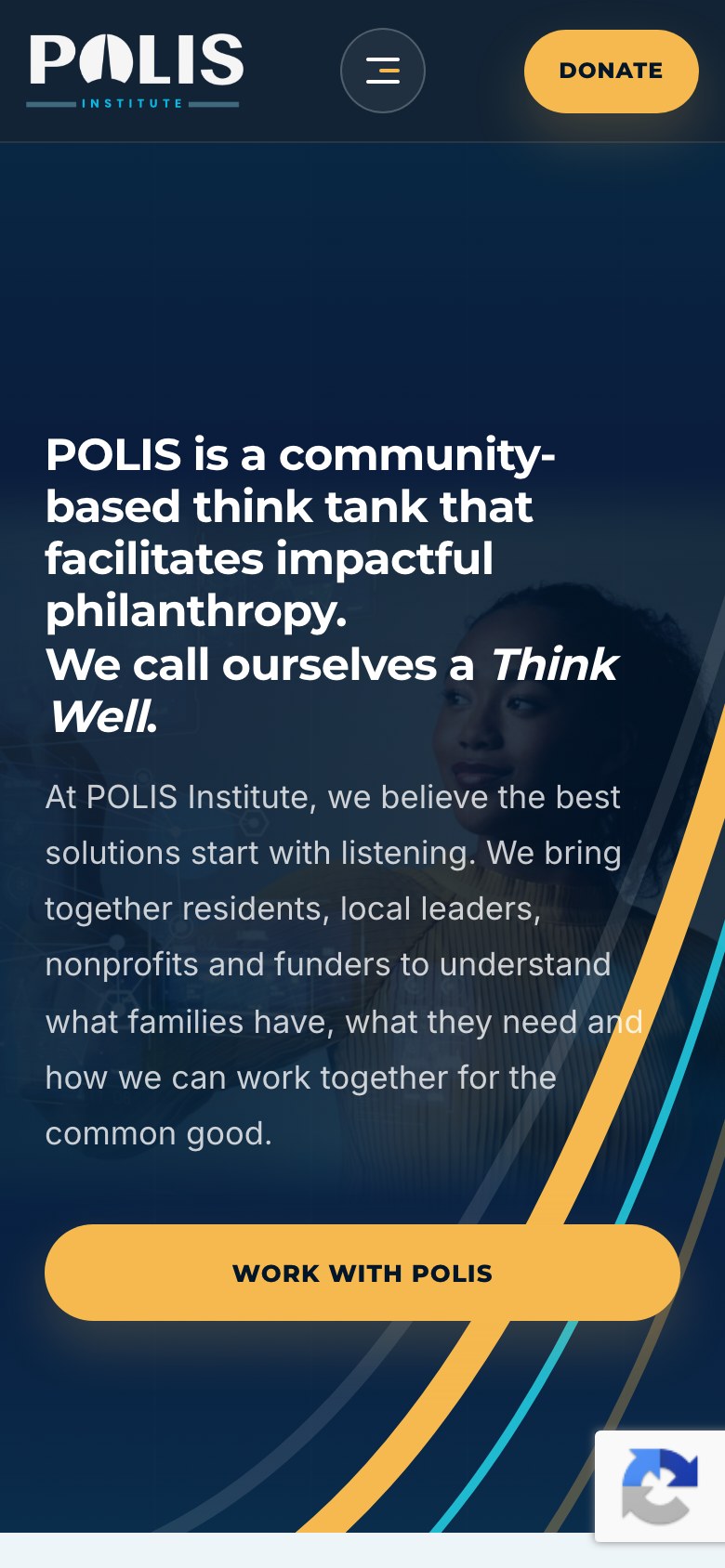
Since 2009, POLIS Institute has helped Central Florida communities think well so that funders invest well. Its old website described that work. The rebuild demonstrates it.
- Client
- POLIS Institute
- Year
- Service
- Website Redesign, Information Architecture & SEO
Who POLIS Institute Is
POLIS Institute is a community-based think tank in Orlando. It started in 2009 with a single research question: what impact are nonprofits actually having on solving root problems? The answer that a team of researchers found, led by Phil Hissom, was uncomfortable. Despite enormous investment and a crowded ecosystem of service providers, there was little evidence that the root issues were moving. Philanthropy was funding relief, not resolution.
POLIS was founded to close that gap. The name means city, and the premise is a chain: dignified people make strong families, strong families make flourishing neighborhoods, and flourishing neighborhoods make thriving cities.
The organization calls itself a Think Well. The metaphor is literal. A community well is where a neighborhood goes to draw what it needs, and it is also where the neighborhood gathers. POLIS sits in that position between residents and the people funding the work: listening first, researching what is actually true, then handing funders and institutions something they can act on. Their own shorthand for the outcome is Think Well. Invest Well. Live Well.
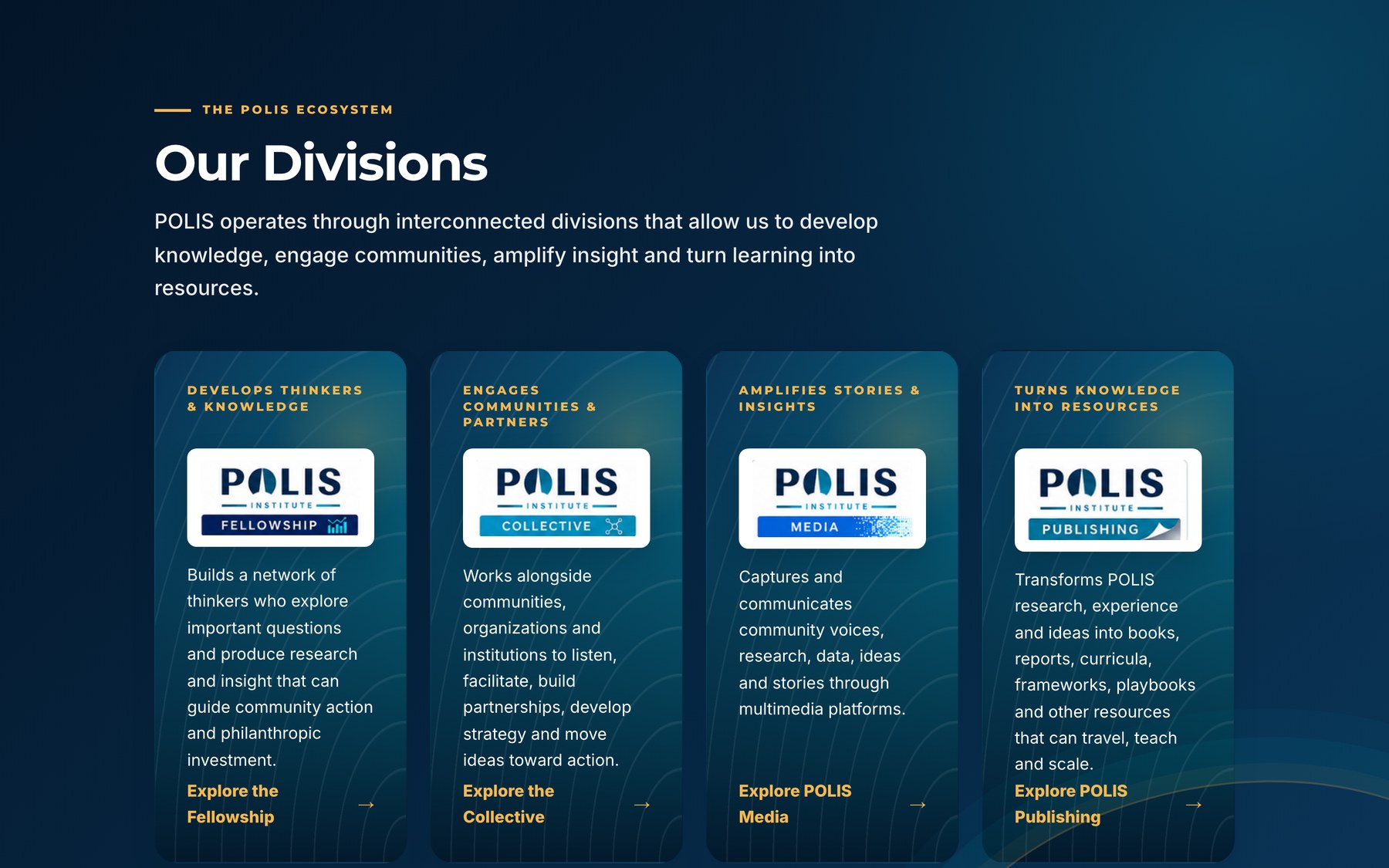
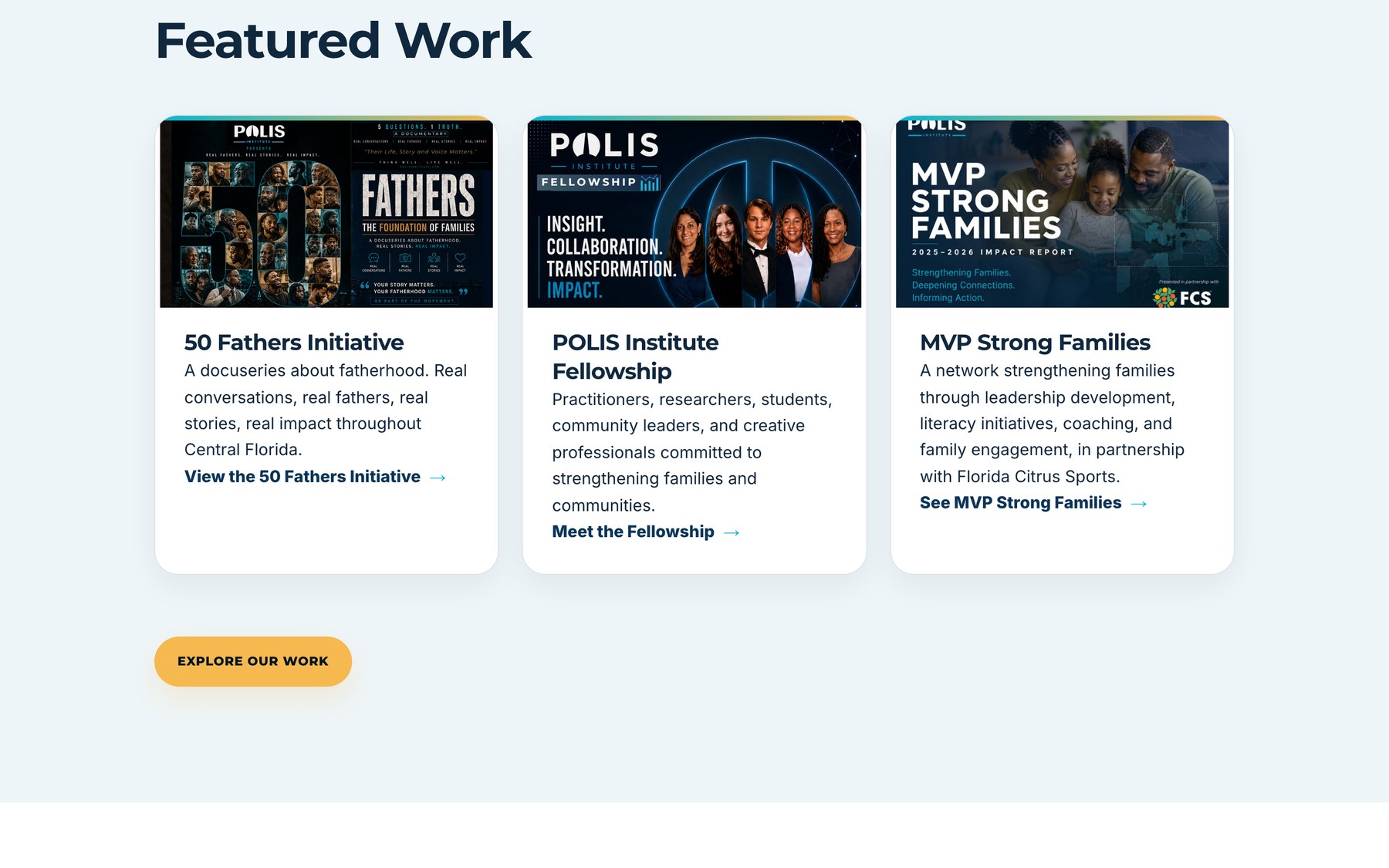
That work now runs through four divisions. POLIS Fellowship builds a network of thinkers who investigate questions communities and funders need answered. POLIS Collective works alongside communities, organizations and institutions to listen, build partnerships and move ideas toward action. POLIS Media captures and communicates community voices and stories. POLIS Publishing turns what POLIS learns into books, reports, curricula and playbooks that can travel.
It is a genuinely unusual organization, and that was the whole problem with the old website.
- Founded, after one research question
- 2009
- Divisions in the POLIS ecosystem
- 4
- Community case studies, each with its own page
- 6
The Challenge: A Think Tank That Read Like a Brochure
Nothing was wrong with what POLIS had to say. The substance was all there on the old site. The problem was that a visitor had to work extremely hard to find it, and a search engine could not find it at all.
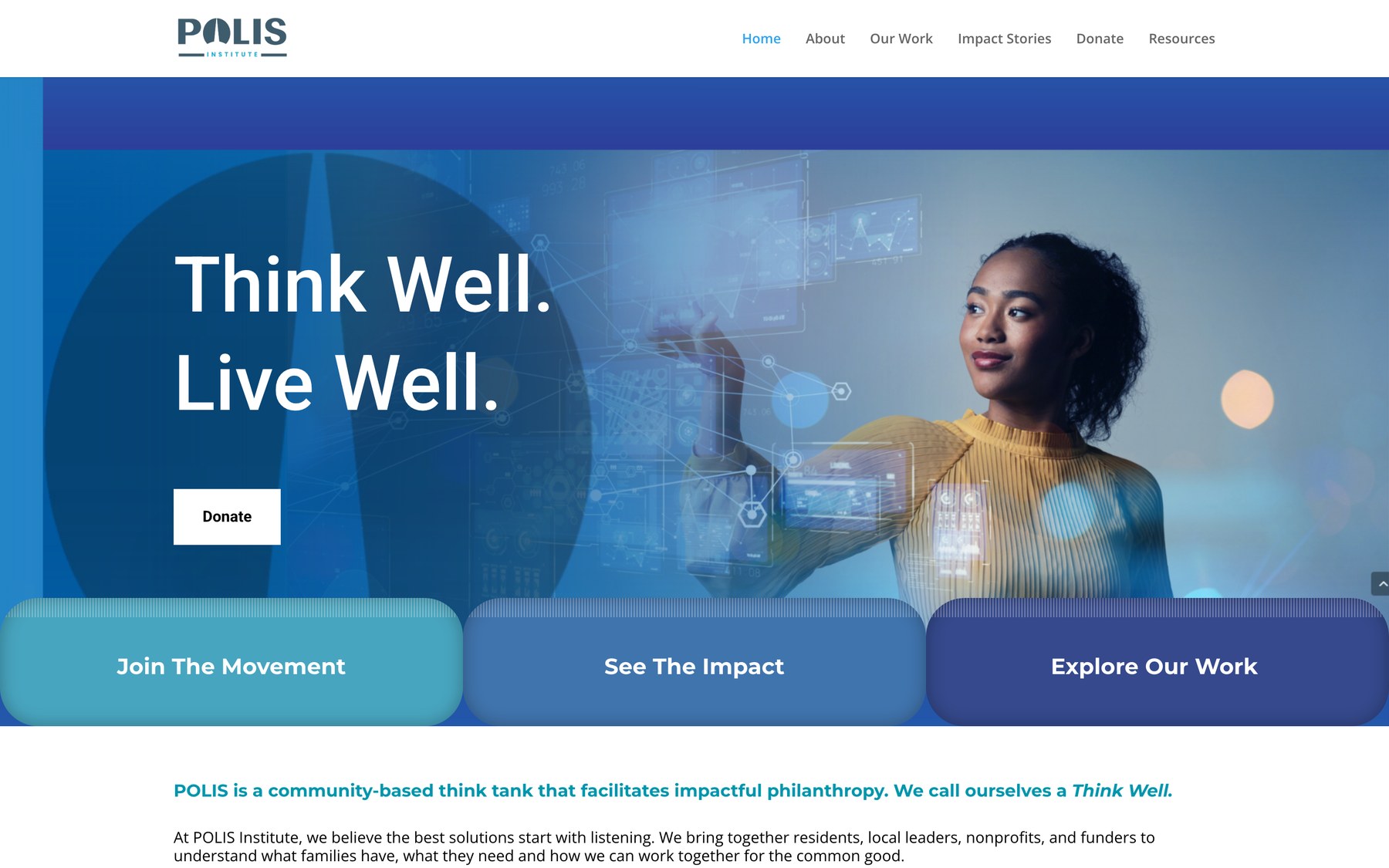
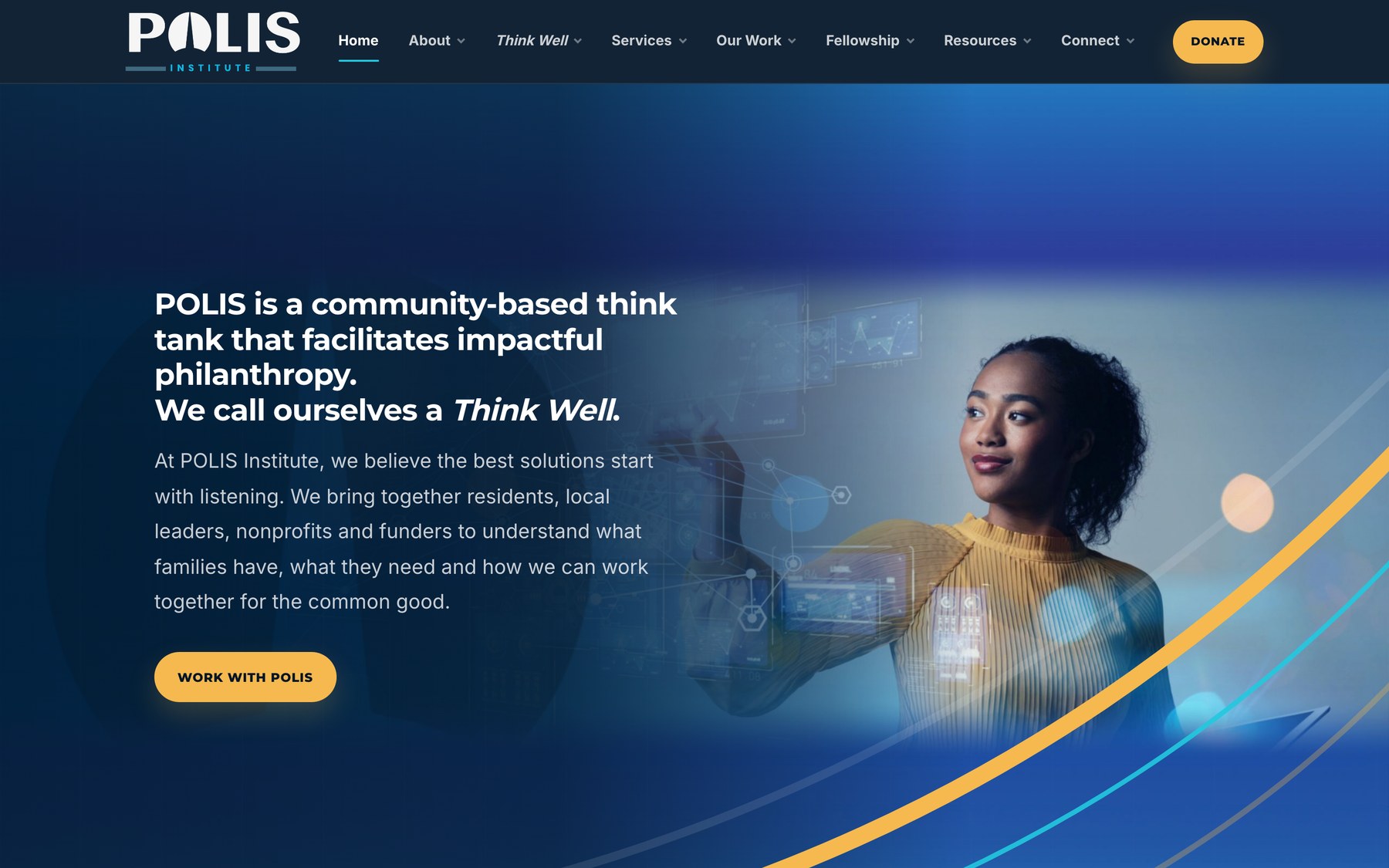
The model was never explained. Think Well is the idea the entire organization is built on, and on the old site it appeared as a tagline and a passing italic reference. There was no page that explained what it means, how it works, or who is involved.
The ecosystem was invisible. The Fellowship, the Collective, Media and Publishing are four distinct ways to engage POLIS. On the old site the Fellowship appeared as a heading partway down a long Our Work page. The other three were not presented as divisions at all.
Services and initiatives were the same page. A funder asking "what can I hire POLIS to do?" and a partner asking "what is POLIS doing right now?" landed in the same scroll of bulleted role lists. Neither question got a straight answer.
Years of results sat in one long page. Every case study lived on a shared Impact Stories page, stacked one after another in alternating tan and white bands. The outcome numbers that matter most, the ones a funder is scanning for, were baked into flat images.
Search engines were given nothing to work with. Fourteen of the fifteen pages on the old site had no meta description at all. Page titles were internal shorthand: families - Polis Institute, west lakes - Polis Institute, NOI - Polis Institute, Steam - Polis Institute. The About page carried twelve separate H1 tags, and Our Work carried nine, so nothing signalled what any page was actually about.
And it was heavy. The old homepage transferred 12.5 MB of assets on a single load, and the Our Work page transferred 15.9 MB. Several pages that did exist, including the East Winter Garden and STEAM Academy case studies, were not linked from the six-item navigation at all.
The Strategy: Give Every Part of the Work a Place to Live
The rebuild was an information architecture project before it was a design project. POLIS does six or seven genuinely different things, and the old site had four places to put them. We started by giving each one a home.
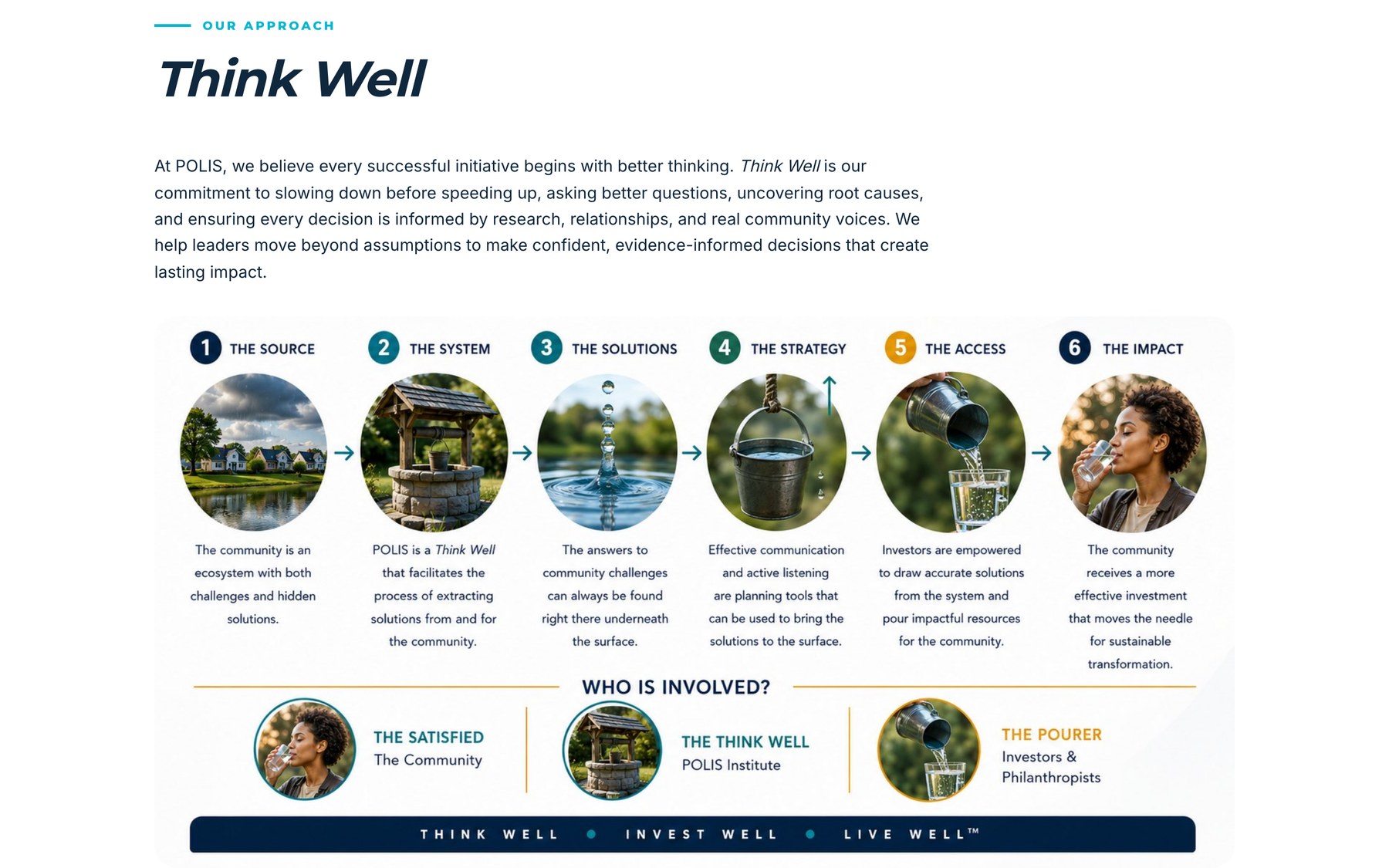
The Think Well model gets its own page
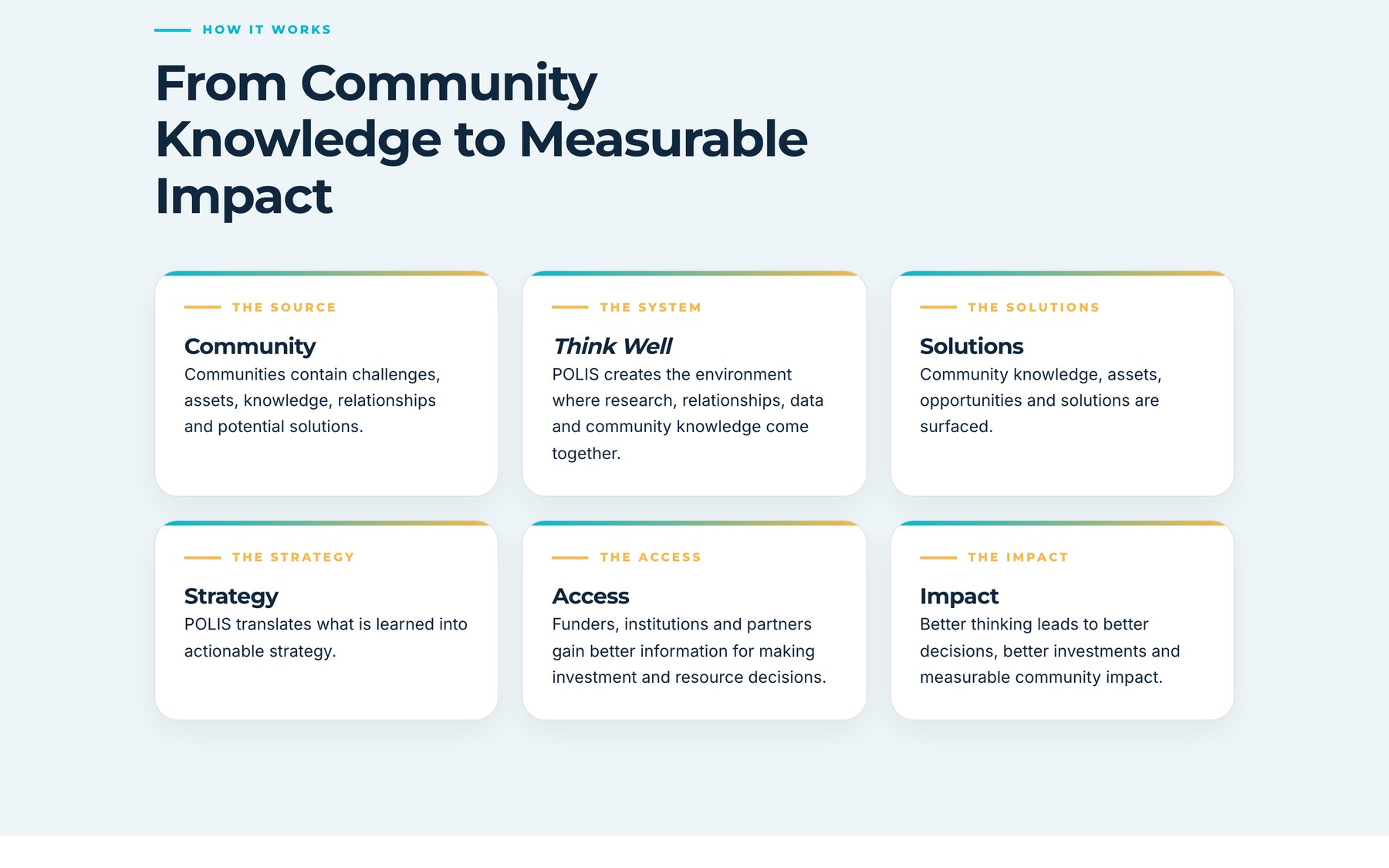
The idea that defines POLIS now has a page that explains it, plus a diagram on the homepage that walks through the model in six steps: the Source, the System, the Solutions, the Strategy, the Access and the Impact. It names the three parties involved, which is the part that makes the metaphor click: the Satisfied is the community, the Think Well is POLIS, and the Pourer is the investor or philanthropist.
The four divisions become the spine of the site
POLIS Fellowship, Collective, Media and Publishing are now presented as what they are: an interconnected ecosystem, each with its own branded identity, its own explanation and its own onward path.
Services are separated from initiatives
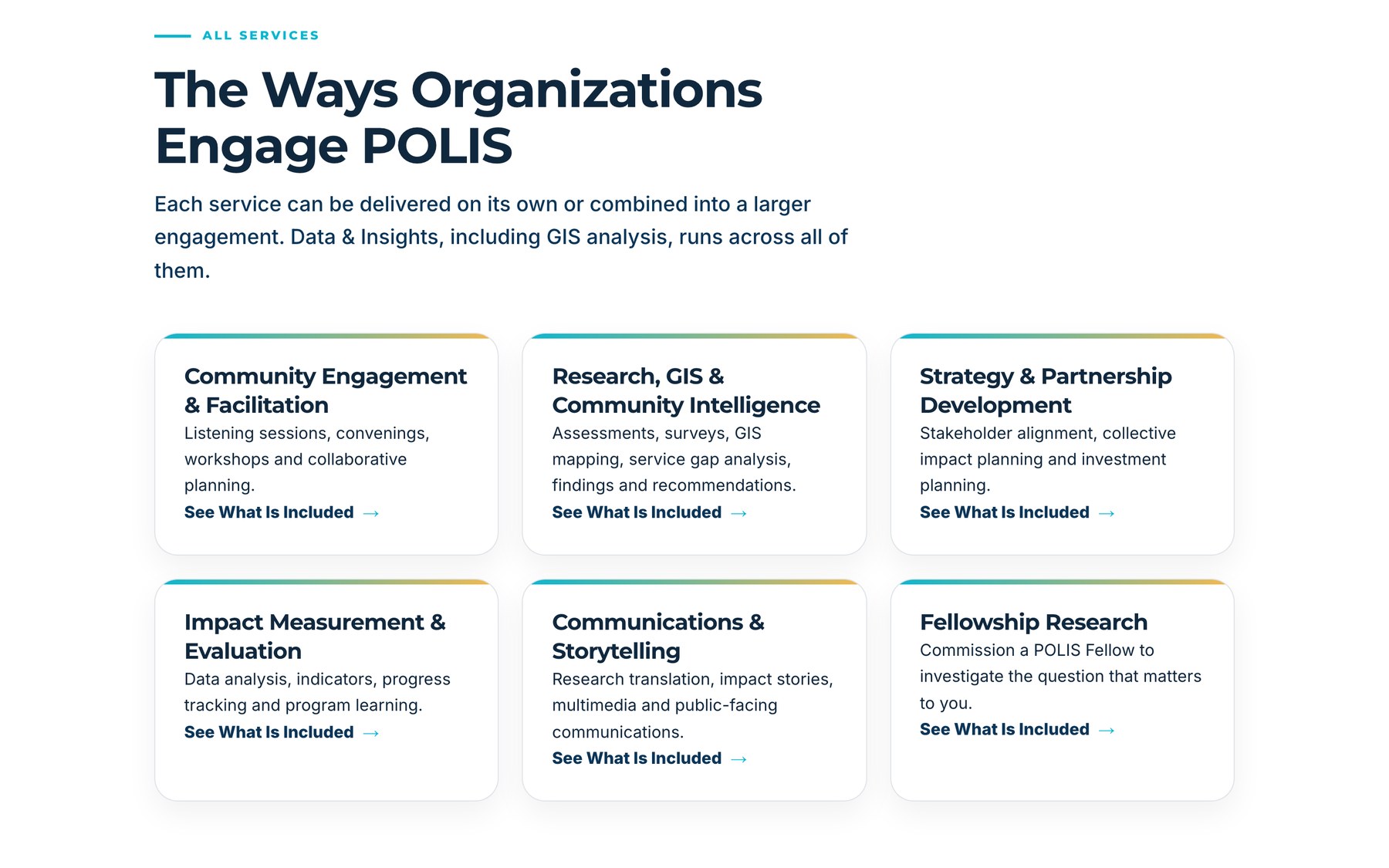
We split the single Our Work page into two questions with two answers. A new Services page answers "what can I hire POLIS to do", with six engagements that can each be delivered on their own or combined into a larger one: community engagement and facilitation; research, GIS and community intelligence; strategy and partnership development; impact measurement and evaluation; communications and storytelling; and Fellowship research. Data and Insights, including GIS analysis, runs across all of them.
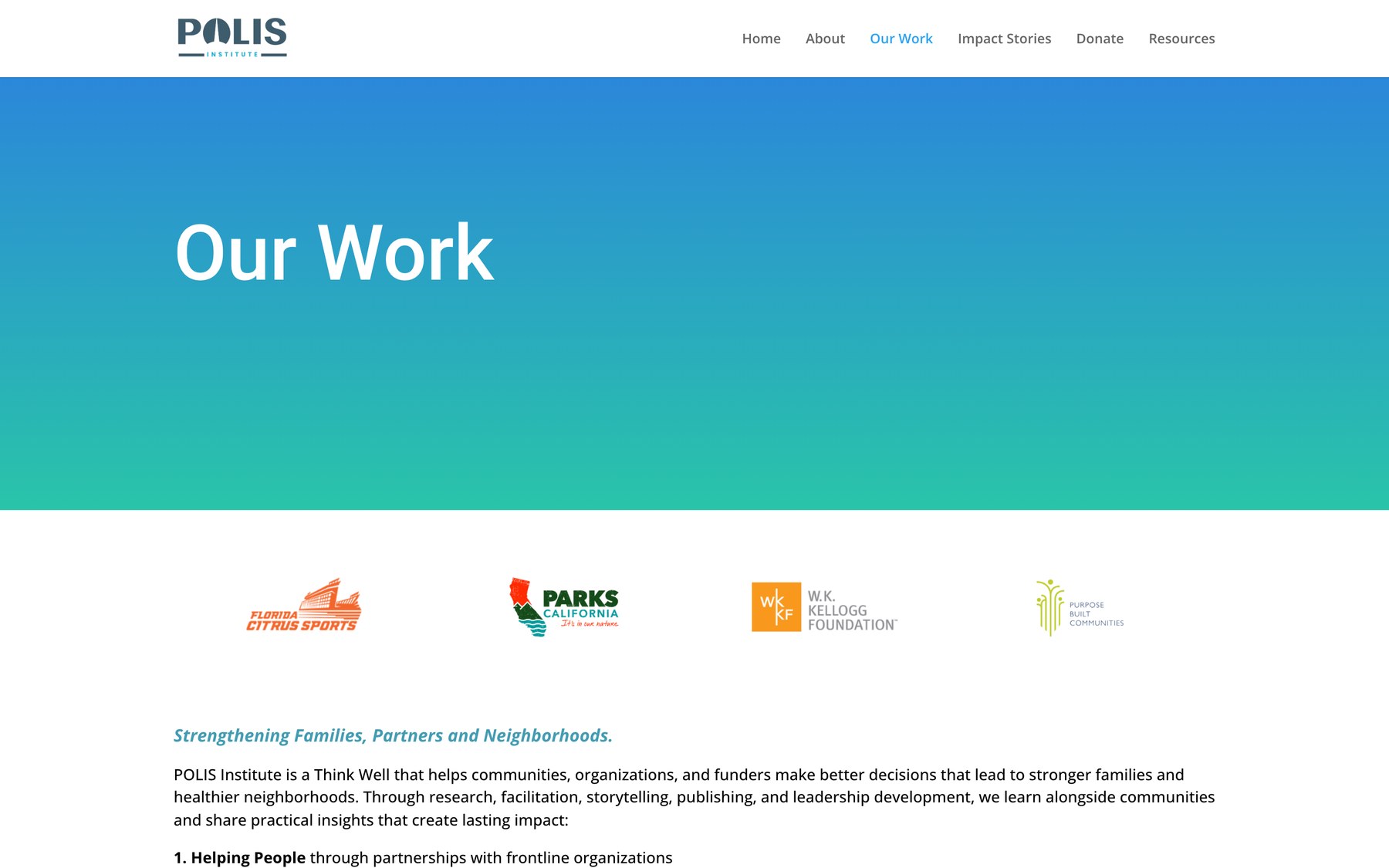
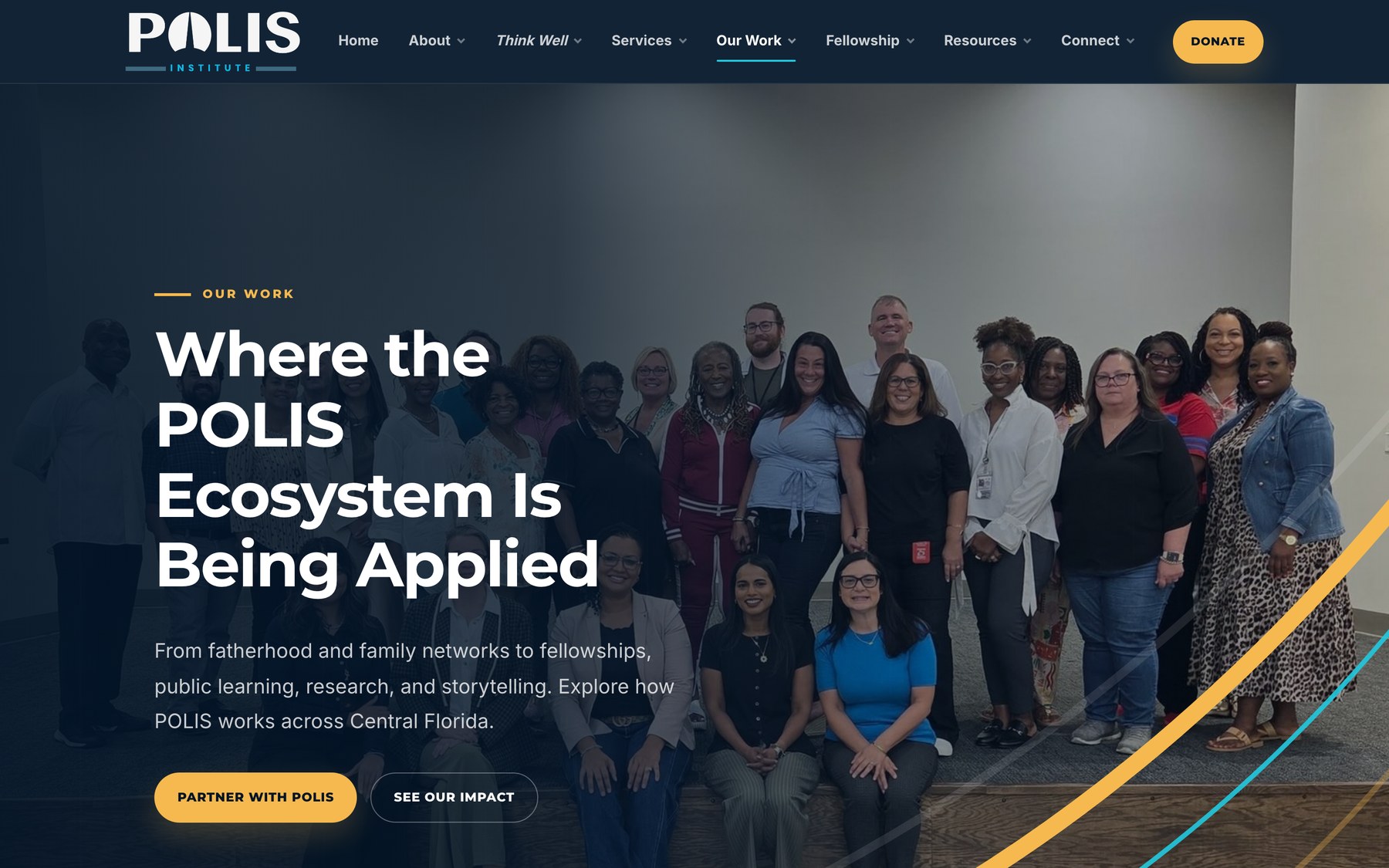
Our Work then answers the other question, "what is POLIS doing right now", and it finally looks like the work rather than reading like a memo.
Every impact story becomes a case study with its own URL
This is the change that matters most for an organization whose credibility rests on evidence. Six community case studies now each have their own page, their own title and description, and the same structure every time: the Background, the Work, what Changed, the Solutions POLIS applied, and a way to bring the work to your own community.
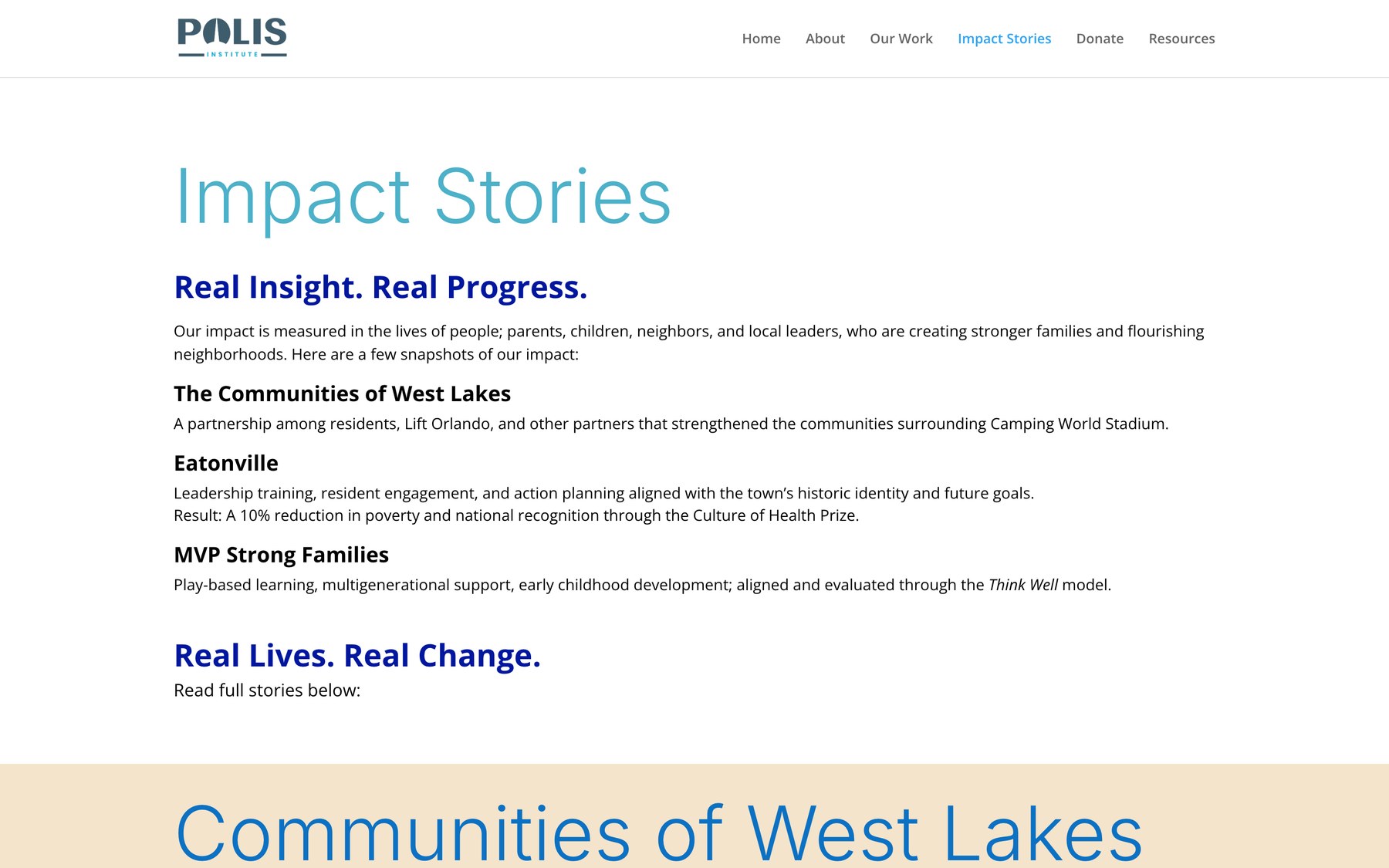
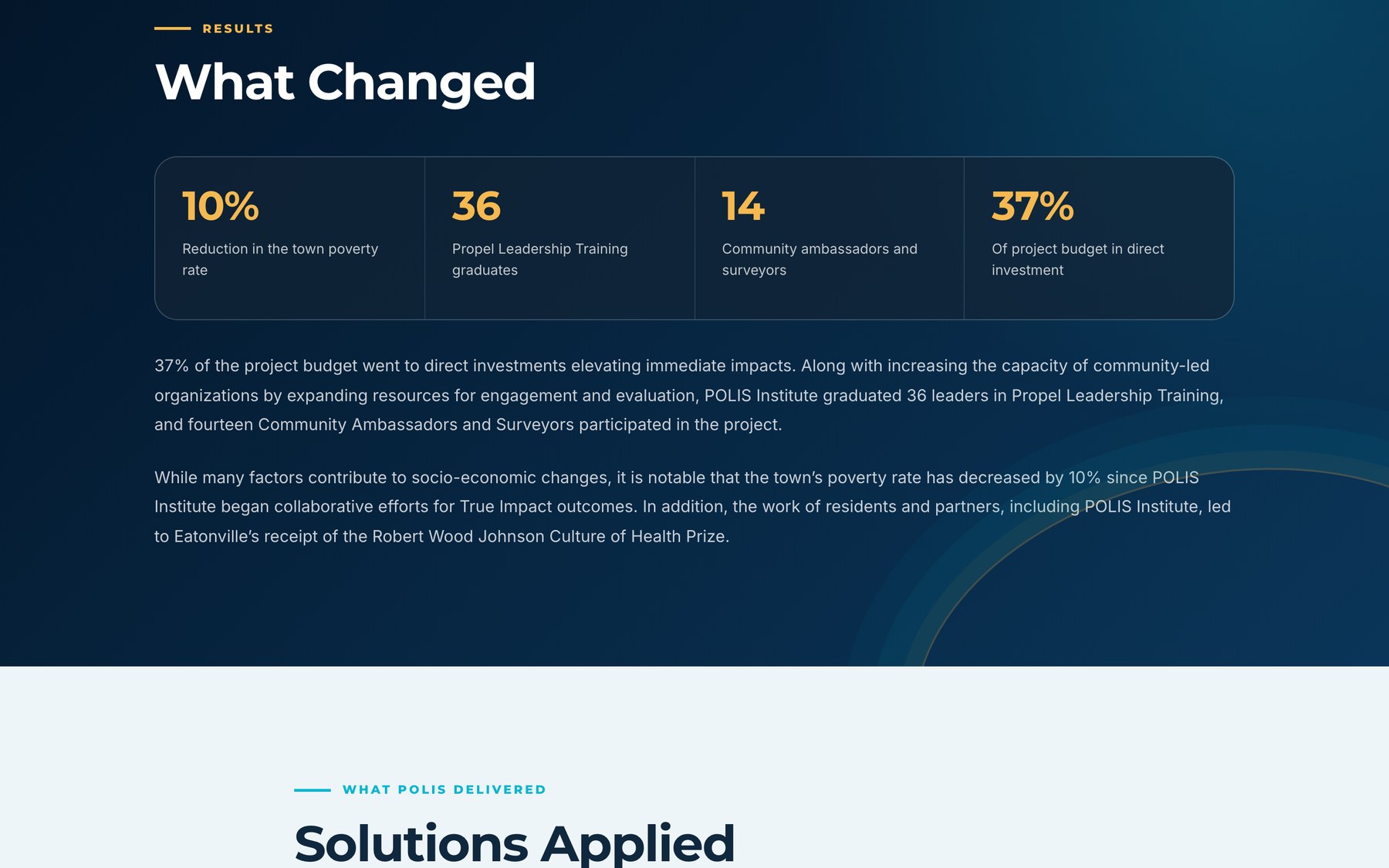
The six stories now carry the work properly. Communities of West Lakes documents a ten-year Purpose Built Communities collective impact initiative that delivered a $100M campus and left behind a resident-led 501(c)(3). Eatonville covers two phases of resident-led action in the oldest incorporated Black town in the nation, work that contributed to a 10% poverty reduction and the town's Robert Wood Johnson Culture of Health Prize. Historic East Winter Garden sits alongside a 28% rise in per capita income. S.T.E.A.M. Wins with Representation reached more than 6,000 households across fourteen Orlando neighborhoods. Strong Families reaches more than 1,200 caregivers a year with Florida Citrus Sports. The Black Nonprofit Leaders Network convened sixty leaders of color and paid twenty-three of them membership stipends.
That is a serious body of work. It now reads like one.
One clear way in, for each audience
The old navigation had six flat links, no dropdowns and no button-level call to action. The new one has eight sections with dropdowns exposing more than forty destinations, plus a Donate button that stays on screen. A new Connect page splits the three real ways to engage: explore the services, hire a POLIS Fellow to research a specific question, or partner on an initiative. The Fellowship is now a front door in both directions, for funders commissioning research and for residents, students and practitioners who want to become Fellows.
The Results
The site is new, so the SEO and traffic compounding is still ahead of it. What can be measured today is the foundation, and it changed substantially.
Every page is now findable and describable. All eighteen pages carry a written title, a written meta description and exactly one H1. On the old site, fourteen of fifteen pages had no meta description and several carried nine or twelve H1 tags. Titles moved from internal shorthand to the language people actually search: Community Engagement Services, Research and GIS, Our Work | Community Development Case Studies, POLIS Fellowship | Thinkers Exploring Questions That Matter.
The pages got dramatically lighter. The homepage went from 12.5 MB to 2.9 MB, a 77% reduction, and Our Work went from 15.9 MB to 3.1 MB, a reduction of 80%. Largest Contentful Paint on the homepage fell from roughly 2.4 seconds to around one second across repeated measurements. For an audience that includes residents on mobile data, page weight is an access issue rather than a vanity metric.
The proof is machine readable. Outcome figures that used to live inside flat images are now live text inside structured results sections. That matters twice over: once for Google, and once for the AI answer engines that increasingly field the question "who does community development research in Central Florida".
Nothing is orphaned. Case study pages that existed on the old site but were unreachable from the navigation are now linked from Our Work, from the homepage and from the footer.
- Lighter homepage, 12.5 MB to 2.9 MB
- 77%
- Pages with a written title, description and single H1
- 18 of 18
- Largest Contentful Paint on the homepage
- 2.4s to 1s
What We Did
- Full Website Redesign
- Information Architecture
- Brand Expression & Visual System
- Messaging & Content Strategy
- Case Study Page System
- Technical SEO
- AEO & GEO for AI Search
- Performance Optimization
- Mobile Experience
- Conversion Paths & Forms
Where the Work Happens
POLIS Institute works with residents, civic leaders, nonprofits, educators, researchers, funders and institutions across Central Florida:
- Orlando
- Communities of West Lakes
- Eatonville
- Historic East Winter Garden
- Orange County
Does Your Organization's Site Show the Work?
Mission-driven organizations almost always have more substance than their website admits. The work is real, the outcomes are real, and the site is still describing them in paragraphs nobody reads. If that sounds like yours, book a call and we will walk through what is actually buried in there.