
Marketing for Firms That Build Homes Worth Looking At
Custom builders, architects, interior designers, and the trades around them share one problem: the work is extraordinary and the website is a brochure. We close that gap, and build the search visibility that puts you on the shortlist before anyone picks up the phone.
Free SEO & AI Search Audit
Find out if AI and Google recommend your company.
A strategist checks Google, Maps and AI assistants and sends your audit within 2–3 business days.
- Where you show up in Google and AI search
- Who gets named instead of you
- A prioritized plan, not a sales pitch
The Shortlist Is Made Before You Hear From Anyone
A premium residential project is planned for twelve to twenty-four months before a contract is signed. Almost all of that happens in private — saved images, comparison searches, and a short list of firms whose websites held attention long enough to matter. Whoever showed up during that window is who gets the call.
Referrals built the firm and now they cap it.
Almost every premium residential firm we meet was built on word of mouth, and word of mouth is an excellent business until it is the only one you have. It delivers what it delivers, it arrives when it arrives, and it cannot be turned up in a slow quarter. Firms at this level rarely have a lead problem. They have a lead *timing* problem, and no second channel to smooth it.
The work is extraordinary. The website is a brochure.
A homeowner about to spend two years and several million dollars is doing exactly what you would do: looking hard, comparing carefully, and reading everything. Then they land on a stock hero image, a grid of thumbnails, and a contact form. Nothing on that page explains why your work costs what it costs, so the only remaining basis for comparison is price.
You are being shortlisted before anyone calls you.
The shortlist is assembled in private, months before the first conversation, from search results, saved images, and the two or three firms whose sites actually held attention. Being excellent and invisible produces the same outcome as being mediocre. By the time you hear from someone, the comparison has already happened.
The Work
What a Site at This Level Actually Looks Like
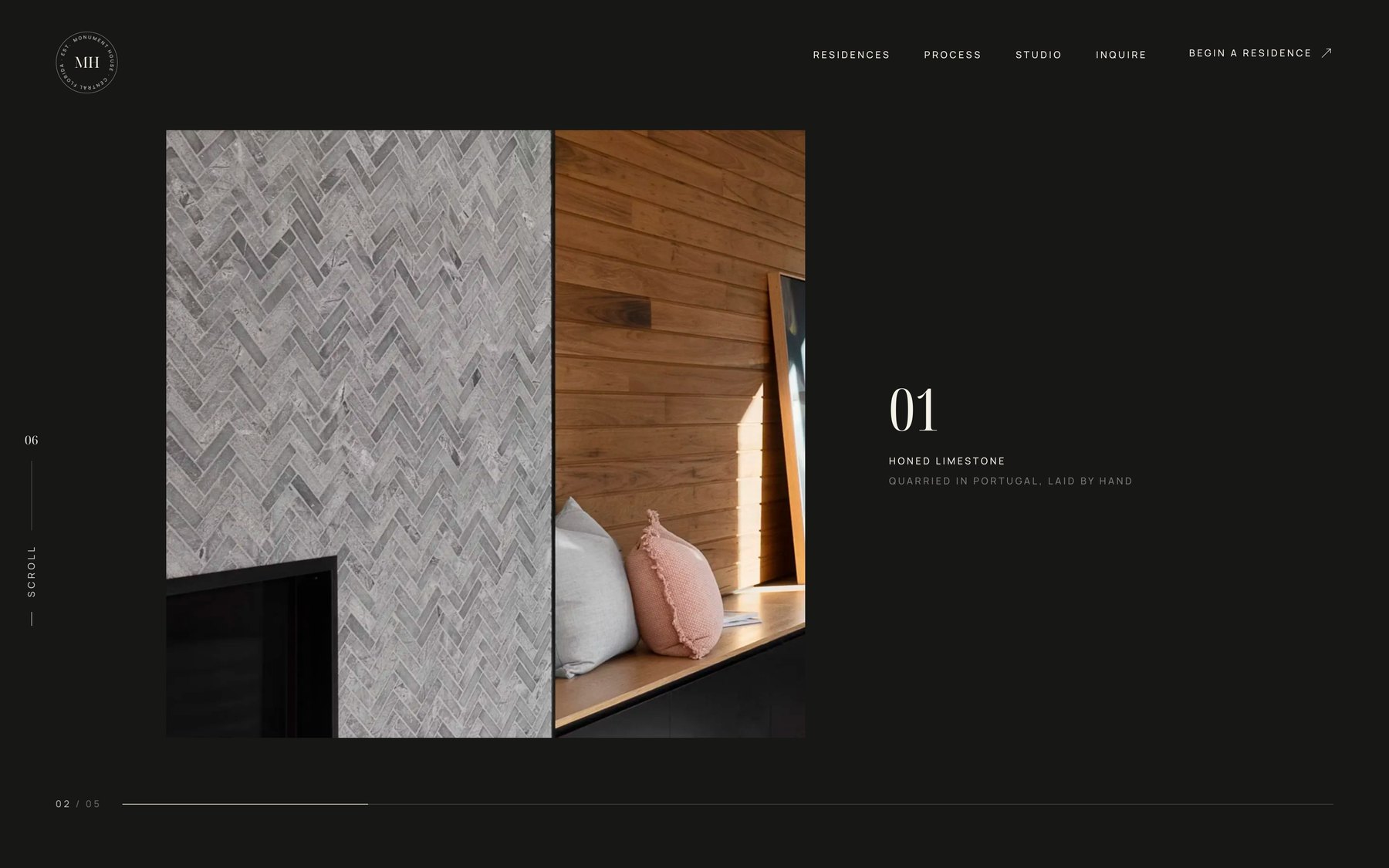
Two of these are concepts we built ourselves to demonstrate the approach, and one is a live client rebuild with the numbers attached. We label which is which, because a portfolio that blurs that line is exactly the kind of thing this audience notices.
Monument House
Concept build



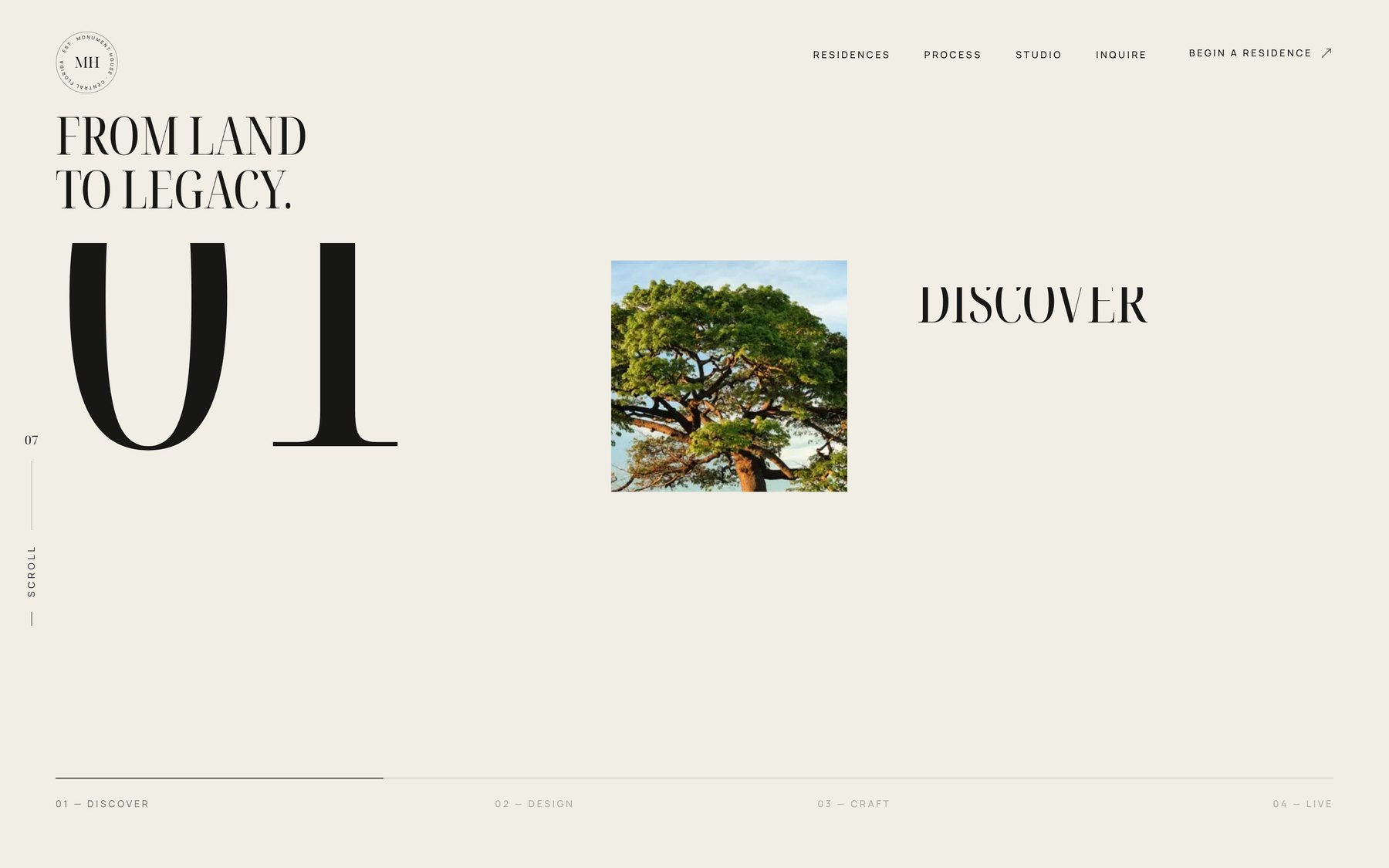
Blueprint Arising
Concept build

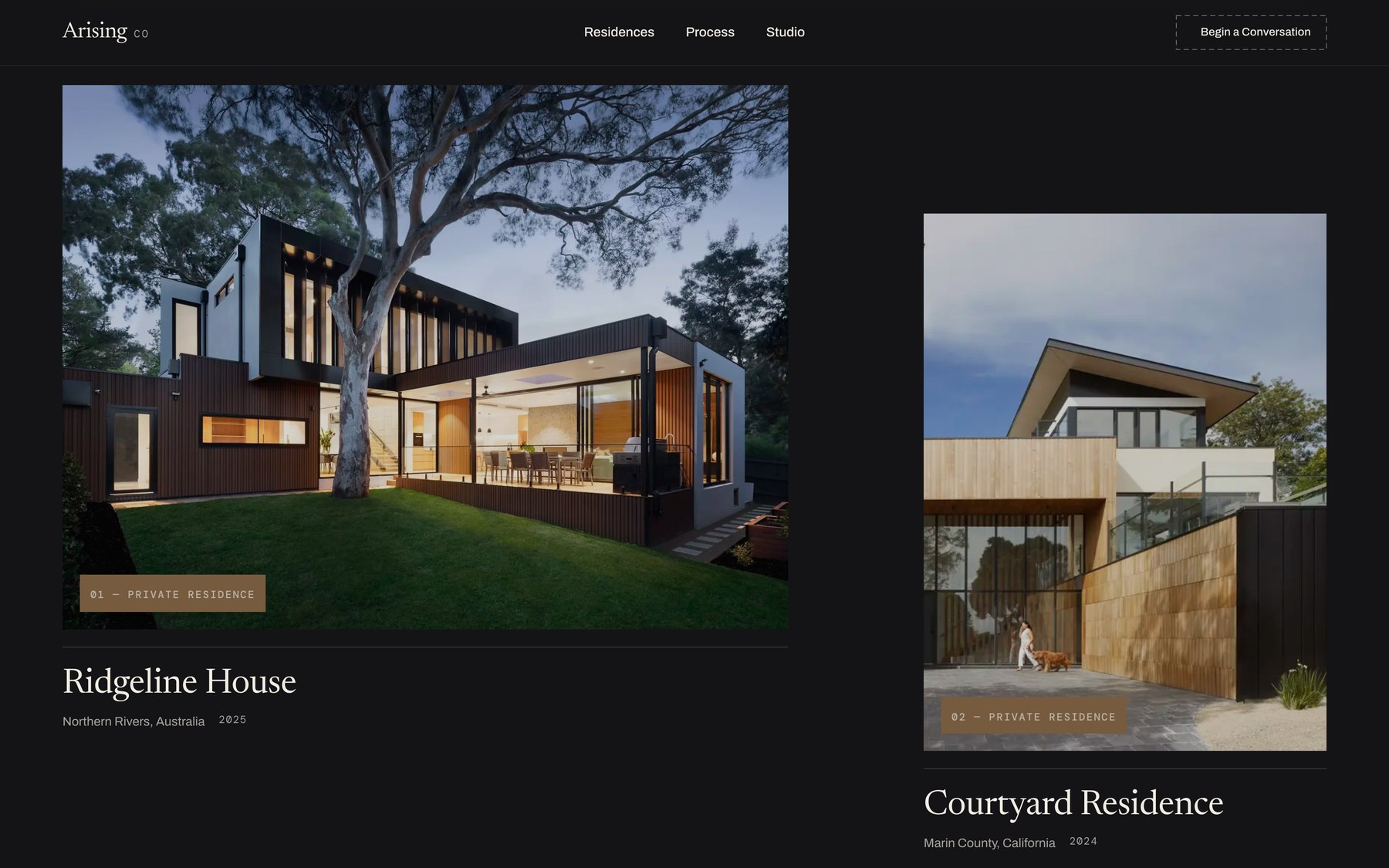


Springhetti Group
Client engagement

Monument House and Blueprint Arising are concept builds — real, working sites at monumenthouse.netlify.app and the Blueprint Arising demo, built by us to show what is possible rather than commissioned by a client. Springhetti Group is a live engagement and every number attached to it is theirs.
Case Study: Springhetti Group
A luxury outdoor living brand, with the numbers to show for it.
Springhetti Group builds luxury outdoor spaces across northeast Wisconsin — fiberglass pools, outdoor kitchens, pergolas, and the hardscape that ties them together. They were buying a great deal of traffic and converting a thin slice of it.
The 2026 rebuild traded broad paid reach for owned organic visibility and an experience built for a luxury buyer. Engagement rate rose 107.54% year over year, organic search now drives close to half of all traffic, and the project calendar is booked into 2027.
Engagement rate, 28.78% → 59.73%
Of all traffic now from organic search
Project calendar booked into
Return across the wider engagement
In Their Words
Hear it from the client.
Kellen Gildersleeve, Marketing Director at Springhetti Group, on what changed once the website, search and paid campaigns started working as one system.
Read the redesign case study“He rebuilt our site from the ground up, got us ranking on Google for the keywords that actually bring in customers in areas we wanted to do business in, and then built out a paid ad campaign that's been a game-changer.”
+107%
engagement after redesign
What We Actually Build
The same six components in every engagement, weighted differently depending on whether you sell construction, design fees, or both.
A Site Built for the Price Point
Project pages with real depth — program, materials, decisions, the details that cost money and that nobody notices unless you point at them. The single biggest lever at this price point, and the one almost every firm in the category handles worst.
Photography Given Room
Your photographer is the most expensive marketing asset you own and most sites reduce their work to 400px thumbnails. Full-bleed treatment, proper compression, and image SEO so the photographs are findable rather than just decorative.
Search That Reaches the Planning Phase
Cost, style, process, and timeline questions get asked twelve to twenty-four months before a contract is signed. Answering them is how a firm becomes familiar before it is ever contacted — and familiarity is the entire referral advantage, reproduced at scale.
Local Visibility Without the Cheapening
Map presence, review systems, and location pages worked properly, so the firm shows up where high-intent local searches resolve without the discount-contractor positioning that usually comes attached to that channel.
AI Search Visibility
A growing share of research now starts in ChatGPT, Gemini, and AI Overviews, which answer by synthesizing whoever explained things clearly. Firms that publish real substance get cited. Firms with a thin brochure site do not exist in that layer at all.
Attribution You Can Act On
Which searches and pages produced consultations that became signed contracts, not which produced traffic. With a sales cycle measured in seasons, tracking that stops at form fills tells you almost nothing worth knowing.
Who This Is For
Six related businesses that sell into the same affluent household and frequently refer one another. A custom home builder, the architect who drew it, the designer who furnished it, and the outdoor living company that finished the site are all marketing to the same person at different points in the same project.
If you are a remodeling contractor or a general home services company, the economics are different enough that we would point you at remodeling SEO or home services marketing instead.
- Custom and luxury home builders
- Residential architecture practices
- Interior design studios
- Design-build firms
- Outdoor living and pool builders
- Landscape architects
Pick Your Side of the Project
Each vertical has its own page, and the two decisions most firms are actually weighing — a rebuild or search visibility — have their own underneath.
One System: Site, Search, Maps, and AI
These are not four projects. A website rebuild creates the pages that SEO has something to rank, those pages are what local SEO points at from the map pack, and the depth written into them is what gets a firm cited in AI search results. Run separately they compete for the same budget. Run together each one makes the next cheaper.
Where demand needs to exist before the organic side compounds, paid search fills the gap and doubles as keyword research — it tells you which terms produce real consultations before you spend six months trying to rank for them.
Our process is written out step by step, and the rest of our client work is published in full, numbers included.
Premium Residential Marketing, Answered
We get all our work from referrals. Why would we market at all?
Because a referral pipeline is a single point of failure that happens to be working. It is not a strategy you chose, it is a condition you inherited, and it has three properties that should worry you: you cannot increase it on demand, you cannot aim it at the project type or budget you actually want, and it ends the moment a key relationship retires or relocates. The goal is not to replace referrals — they will remain your best source of work. It is to make sure that when a referral looks you up, which every one of them does, the firm they find online matches the firm they were told about. And to add a second channel that produces work in the quarters when the first one is quiet.
Is marketing at this price point different from marketing a normal contractor?
Materially, yes, and the difference is mostly in the time horizon and what the content has to do. A homeowner replacing a roof decides in days and calls three companies. A homeowner building a custom home spends twelve to twenty-four months in planning and speaks to firms much later in that process, having already formed opinions. That means the work that matters most is the work done early — process explanation, cost transparency, and project documentation that builds familiarity long before a conversation. It also means lead-count reporting is close to useless. Five qualified conversations a year can be an excellent year for an architecture practice and a catastrophe for a plumbing company.
Will publishing our pricing cheapen the brand or attract the wrong buyer?
The opposite, in our experience, provided you publish ranges and the reasoning behind them rather than a menu. The buyer at this level is not looking for the cheapest option — they are trying to find out whether they can afford you at all, and whether you are in their range. When they cannot find out, most of them do not call to ask. They call the firm that told them. Publishing an honest range with an explanation of what moves it filters out the people who were never going to be clients, which is time you were going to spend on them anyway, and it earns real trust from the ones who remain.
How long before this produces signed work?
Website and conversion improvements show up fastest, because they act on demand that already exists — a better site converts the traffic you are getting now, usually within weeks of launch. Search visibility takes three to six months to establish and compounds from there. Signed contracts follow the length of your own sales cycle, which at this level is rarely under six months and is often considerably longer. Any agency promising signed custom home contracts in ninety days is describing a business that does not work the way yours does.
Free SEO & AI Search Audit
Find out who your buyers find instead of you.
We will show you where your firm appears in Google and AI search for the projects you want, which firms show up instead, and what it would take to be the name buyers find first. No pitch deck.
Find out if AI and Google recommend your company.