
Marketing for Custom Home Builders
A family plans a custom home for eighteen months before they call anyone. We make sure that during those eighteen months they keep finding you — with honest answers about cost, a project library that documents what you actually build, and the local visibility that closes it.
Free SEO & AI Search Audit
Find out if AI and Google recommend your company.
A strategist checks Google, Maps and AI assistants and sends your audit within 2–3 business days.
- Where you show up in Google and AI search
- Who gets named instead of you
- A prioritized plan, not a sales pitch
The Job Is Decided Before the Bid
By the time three builders are invited to present, the family has been researching for a year, has an opinion about each firm, and in most cases has a preference. The presentation confirms a decision that the published evidence already made.
The lot comes before you do.
A custom home starts with land, and land starts with a realtor, a lender, and a dozen searches about whether a given parcel can be built on. That entire sequence happens before the word "builder" is typed. Builders who publish about lot evaluation, site costs, and what a parcel actually supports meet the buyer at the beginning of the project rather than at the bidding stage.
Cost per square foot is answered by everyone except you.
It is the single most searched question in the category and almost no builder will touch it publicly. The vacuum gets filled by national averages that have nothing to do with your market, your specification level, or your build standard — and then you spend the first meeting arguing with a number a content farm invented.
You lose bids to firms you would beat in a room.
When three builders present and one of them has a website that documents thirty homes properly while the other two have a photo grid, the first one is not competing on price by the time the meeting happens. The comparison that decides the job is made weeks earlier, on the evidence each firm published.
The Work
What a Builder's Site Should Do
Monument House is a concept build — a complete, working site we made ourselves to show custom builders what their web presence could be instead of a photo grid and a contact form. Nothing here was commissioned by a client.
Monument House
Concept build


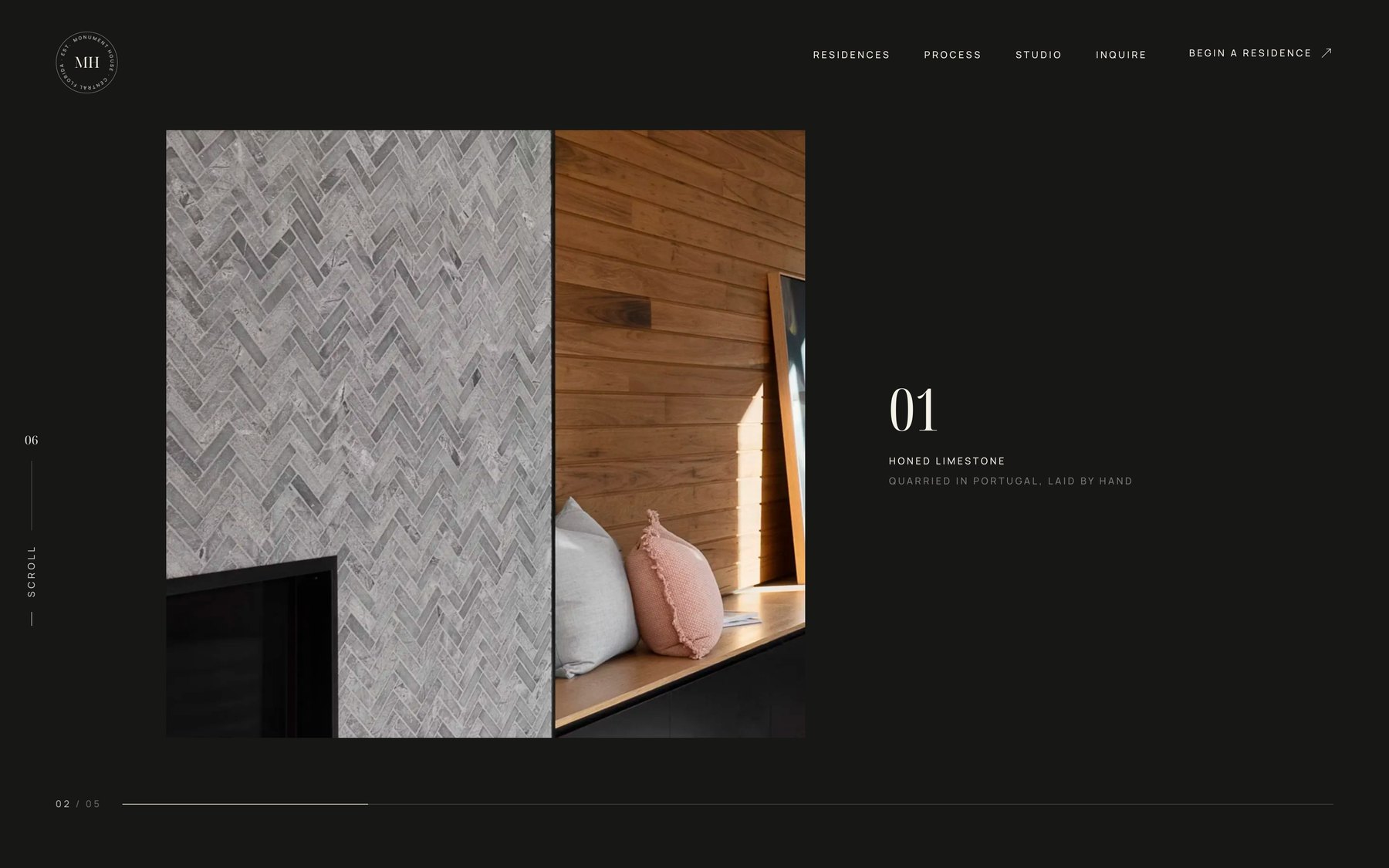

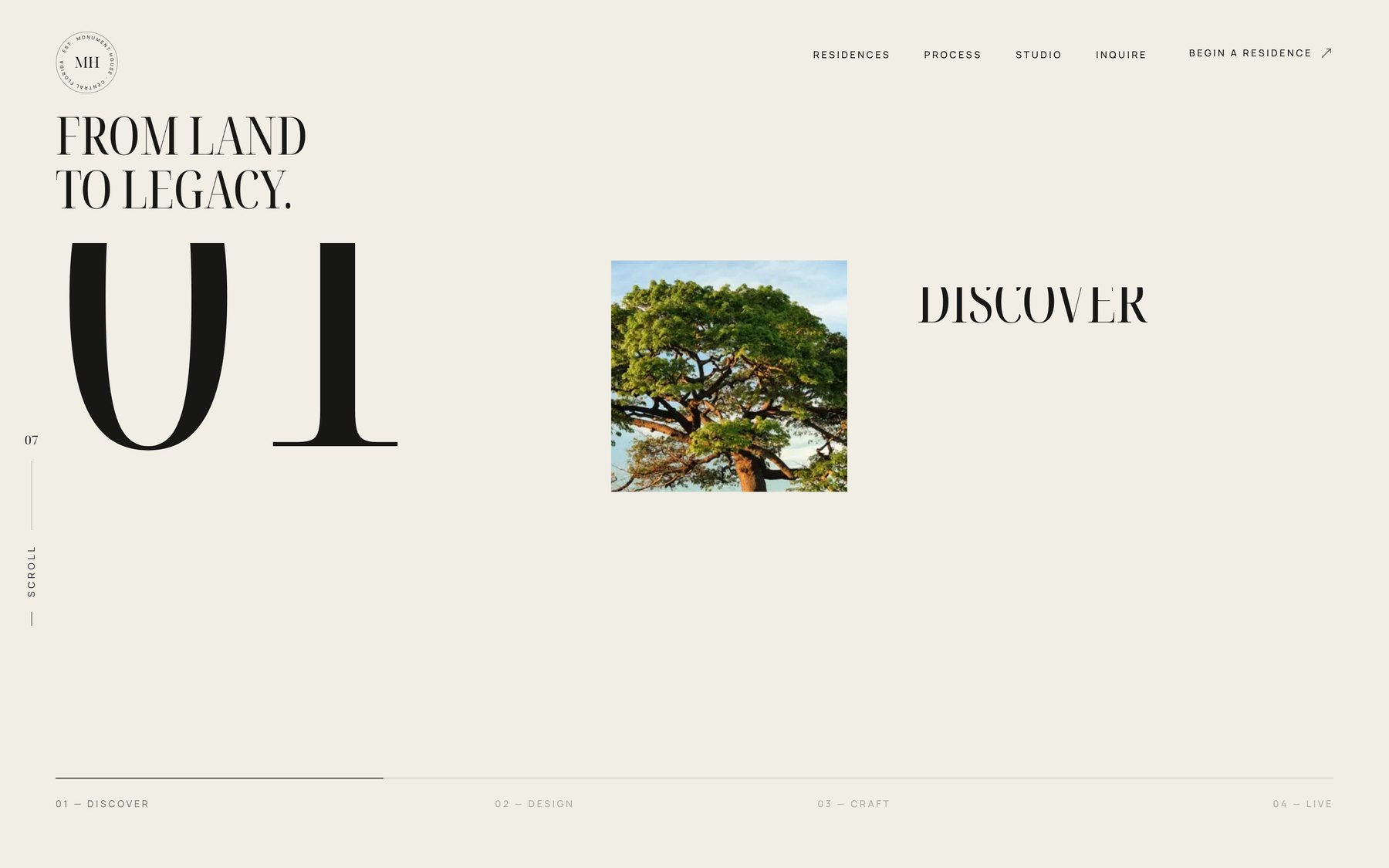
Monument House is not a real company and this was not a paid engagement. We built it because describing what a website could be to a custom home builder has never once landed the way showing them does.
Built Around How a Custom Home Actually Gets Bought
Land, budget, style, builder. Each piece targets a specific step, with the heaviest investment in the early steps most builders skip entirely.
Honest Cost Content
What building in your market actually runs, what moves the number, and where the spend goes. Ranges and reasoning, not a price list. It is the highest-intent research search in the trade and the one your competitors are all avoiding.
Homes as Real Pages
Each completed home becomes a page search can reach: square footage, style, town, program, materials, and the decisions behind them. Thirty homes in a gallery is one page. Thirty homes as thirty pages is a moat.
Process & Timeline Copy
Land through design, permitting, construction, and closeout, with the real durations. The cheapest qualification tool available — it sets expectations before the first call instead of during the third one, and the people it discourages were going to be expensive.
Local & Community Visibility
Map presence and pages for the towns, communities, and school districts you actually build in. Custom home searches are geographically precise, and a builder who names the places they work wins searches a generic service-area page never will.
Reviews at Seven-Figure Trust Levels
Building a custom home is the largest transaction most families ever make, and horror stories dominate the category. A review system built into your closeout process puts the actual record of your work in public where it does some good.
Attribution Across a Two-Year Cycle
Which searches and pages produced the consultations that became signed contracts, tracked across a sales cycle long enough that most analytics setups lose the thread entirely. Budget should follow signed homes, not form fills.
Case Study: Springhetti Group
The approach is not theoretical.
Springhetti Group is a luxury outdoor living company — a different trade, the same buyer and the same problem. Reputation built entirely on finished work, and a digital presence that did not reflect any of it.
We rebuilt the site around the work itself and ran search, paid, and conversion as one program. Engagement rate rose 107.54% year over year, organic went from a minority channel to nearly half of all traffic, and the calendar is booked into 2027.
Engagement rate after the rebuild
Of traffic now from organic search
Return across the engagement
Project calendar booked into
In Their Words
Hear it from the client.
Kellen Gildersleeve, Marketing Director at Springhetti Group, on what changed once the website, search and paid campaigns started working as one system.
Read the redesign case study“He rebuilt our site from the ground up, got us ranking on Google for the keywords that actually bring in customers in areas we wanted to do business in, and then built out a paid ad campaign that's been a game-changer.”
+107%
engagement after redesign
Builders We Work With
Firms whose reputation is built on finished homes and whose digital presence has never matched it. We are not trying to out-publish the national agencies selling builder content by the page — our advantage is a documented result with a luxury outdoor living company and a specific fluency with family-owned operators.
If your work is primarily remodeling and additions rather than ground-up custom, see SEO for remodeling contractors instead.
- Custom home builders
- Luxury and estate home builders
- Semi-custom production builders
- Builders with an in-house design studio
- Second-home and lakefront builders
- Family-owned building firms
The Two Decisions Builders Are Usually Weighing
Most builders arrive here with one of two questions: is the website the problem, or is nobody finding us? Each has its own page.
One System, Not Four Projects
The project pages a rebuild creates are the same pages builder SEO ranks and the same pages local SEO points at from the map. Where a market needs demand immediately, paid search fills the gap and tells us which terms produce real consultations before we spend six months chasing them organically.
Builders frequently share a buyer with the architect who drew the house, the interior designer furnishing it, and the outdoor living company finishing the site. If you run design and construction under one contract, the design-build page is the closer fit.
Our process is written out step by step, and our client work is published in full.
Custom Home Builder Marketing, Answered
How do custom home builders actually get leads online?
In three layers that do different jobs on very different timelines. The earliest is research content — cost per square foot, lot and site evaluation, style and floor plan questions, what the process involves — which reaches a family twelve to twenty-four months before they are ready and makes you familiar by the time they are. The middle layer is your project library: each completed home as its own page, which captures style, size, and town searches and does the persuading once someone is comparing firms. The last layer is local and map visibility, which catches the small number of people searching "custom home builder near me" with intent right now. Builders who only run the third layer compete with everyone. Builders who run the first are usually the only ones there.
Should we publish our cost per square foot?
Publish a range and explain what moves it. Not a price list, and not a single number — a range with the reasoning attached: specification level, site conditions, finish tier, structural complexity, and where the spend actually goes. Three things happen. You stop losing the buyers who assumed you were out of reach and never called to check. You stop spending first meetings correcting a national average that has nothing to do with your market. And you become the builder who answered the question honestly, which is a genuinely durable position in a category where almost nobody will.
Our best work comes from architects and realtors. Does marketing help that?
It helps it directly, and this is the part builders tend to underestimate. Every referral looks you up — the architect sends your name and the homeowner searches it that evening. What they find either confirms the recommendation or quietly undercuts it. A site that documents thirty homes properly makes the referring architect look good for having made the introduction, which makes them more likely to make the next one. The same content also reaches the architects and realtors themselves, who are researching builders to recommend far more often than most builders realise.
How long before this produces signed contracts?
Website and conversion work acts on demand that already exists, so a rebuild typically shows in engagement and inquiry quality within weeks. Search visibility takes three to six months to establish and compounds after that. Signed contracts follow your own cycle, which for custom work is rarely under six months from first contact and often runs past a year. The honest framing is that the work you start now determines the contracts you sign the season after next. Any agency promising signed custom homes inside ninety days is describing a business that does not operate the way yours does.
Free SEO & AI Search Audit
See which builder in your market owns the searches you should.
We will show you where you appear for the cost, style, and town searches that matter, which firms are ahead of you, and what it would take to pass them.
Find out if AI and Google recommend your company.