
Website Design for Outdoor Living Companies
You build quarter-million-dollar outdoor spaces and present them with a template built for lawn care. We build the site that sells a backyard the way a builder sells a house — full-bleed finished work, real project pages, and budget ranges nobody else in your market will publish.

Why Outdoor Living Sites Undersell the Build
This trade moved upmarket faster than its marketing did. Most of the category is still presenting construction projects with the template it used when it was selling patios.
A $250K backyard is sold like a $6K patio.
Outdoor living has quietly become a construction category — pools, kitchens, pergolas, fire features, and the hardscape tying them together, frequently past a quarter million dollars. Most sites in the trade still present it as a landscaping service: a services list, a photo grid, and a quote form. The presentation caps the project size before anyone asks about budget.
Your best builds are indistinguishable from each other.
A gallery of forty backyards with no captions looks, to a homeowner, like forty versions of the same backyard. They cannot find the one with a pool and a covered kitchen on a sloped lot, which is the only one they came to see, so they leave with no sense of whether you have built their project before.
The budget question kills the inquiry before it happens.
Homeowners have no idea whether a full outdoor living build is forty thousand dollars or three hundred, and they will not call to ask. They keep browsing until someone tells them. Most companies in the trade have decided not to be the one who does, which leaves the entire highest-intent search unclaimed.
The Work
A Live Rebuild, and a Concept
Springhetti Group is a real client engagement in exactly this trade — fiberglass pools, outdoor kitchens, pergolas, and hardscape in northeast Wisconsin. Monument House is our concept build for the luxury residential category, included for how it handles project depth.
Springhetti Group
Client engagement
Springhetti Group
Client engagementMonument House
Concept build

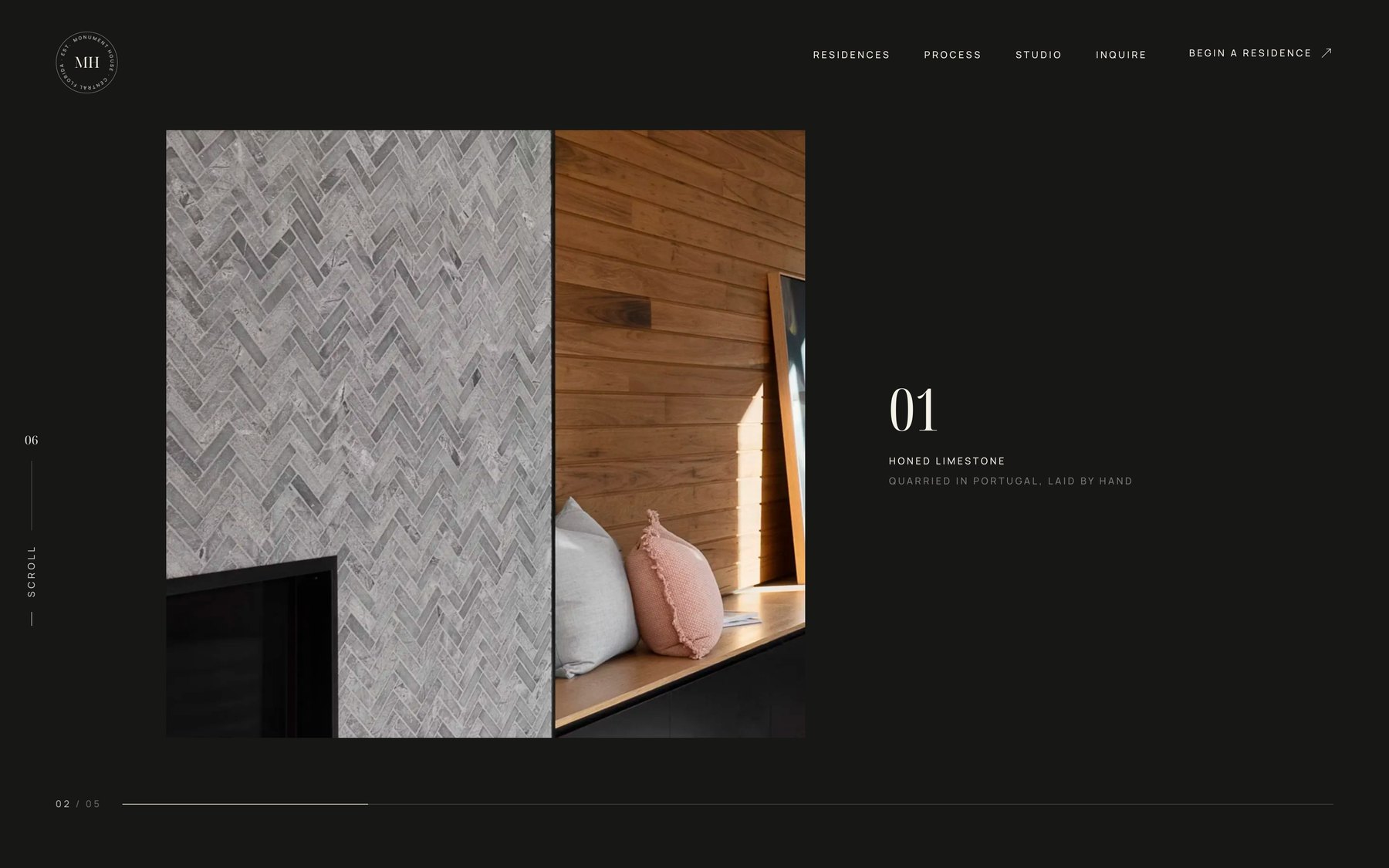
Springhetti Group is a live client engagement and every number attached to it is theirs. Monument House is a concept build — a working site we made ourselves to demonstrate the approach, not a commission.
Case Study: Springhetti Group
The same trade, the same buyer, with the numbers.
Springhetti Group builds luxury outdoor spaces across northeast Wisconsin. In 2025 they were buying a great deal of traffic and converting a thin slice of it — an engagement rate of 28.78% is seven in ten visitors arriving and leaving without touching the work.
The 2026 rebuild traded broad paid reach for owned organic visibility and an experience built for a luxury buyer. Engagement rate reached 59.73%, organic became close to half of all traffic, and the calendar is booked into 2027.
Engagement rate, 28.78% → 59.73%
Of all traffic now from organic search
Return across the engagement
Project calendar booked into
What Goes Into the Build
Six decisions that separate a design-build site from a landscaping template, roughly in order of how much each changes project size.
Finished Work at Full Bleed
Your builds shown at the scale they were shot. A completed outdoor space is an unusually persuasive photograph and the standard theme renders it as a thumbnail in a three-column grid.
Projects, Not a Gallery
Each build as its own page: scope, features, materials, site conditions, town, and budget band. It lets a homeowner find the project that looks like their yard, and it turns forty photographs into forty pages search can reach.
Real Pages for Each Element
Pools, outdoor kitchens, pergolas and covered structures, fire features, hardscape, and lighting each get a proper page. Homeowners search the element they are picturing, not the category you sell.
Honest Budget Ranges
What a full outdoor living build runs in your market and what moves it — size, grade, access, materials, and which features carry the most cost. The highest-intent research search in the trade and the one almost nobody will answer.
Built for Evening Phone Browsing
This gets browsed on a couch, on a phone, usually with a spouse and usually in the off-season. Full-bleed photography and long project pages have to work at 390 pixels or the majority of your traffic never sees the good part.
Fast With Heavy Imagery
Outdoor living sites are image-dense by nature and usually slow as a result. Modern formats, responsive sources, and proper lazy loading so a full-width pool renders before the visitor gives up.
Who This Build Is For
Companies selling designed outdoor projects rather than recurring maintenance — and particularly the ones who have moved upmarket in the last few years while the website stayed where it was.
If pools are the core of the business, see pool builder SEO and pool builder marketing. If the work is primarily install for other people's designs, landscape and hardscape contractors is the closer fit.
- Outdoor living design-build firms
- Pool builders and installers
- Outdoor kitchen and pergola builders
- Hardscape and patio contractors
- Landscape design-build companies
- Firms moving from service to design-build
Related Pages
The Rebuild Is Where the Search Work Starts
Turning forty builds into forty project pages, plus a real page for each element you sell, is the largest expansion of rankable surface area available in this trade. That is why we run web design and SEO as one program, with local SEO working the map layer and paid search filling the seasonal gap while organic compounds.
For the full channel mix in this trade, see SEO and marketing for outdoor living companies. Our process is written out step by step, and the full Springhetti redesign case study is published with its numbers.
Outdoor Living Web Design, Answered
What makes an outdoor living website different from a landscaping site?
The price point and therefore the depth required. A landscaping site is selling a recurring service where the decision is fast and mostly about reliability and price, so it optimises for the shortest path to a quote request. An outdoor living site is selling a construction project, often past a quarter million dollars, researched across an entire off-season. That needs individual project pages with scope and materials, real pages for each element rather than a services list, honest budget ranges, and photography given genuine scale. Present a design-build project with a landscaping template and homeowners will price you like a landscaper, because that is the only signal the page gave them.
Should we publish budget ranges for outdoor living projects?
It is the single highest-leverage page most companies in this trade could build, and almost none of them have. Homeowners genuinely cannot tell whether a full outdoor living build is forty thousand or three hundred thousand, and rather than call and find out, they keep browsing. Publish a range with what drives it — size, grade and access, materials, pool type, structure, automation — and three things follow. You rank for the highest-intent research search in the category. You stop losing people who assumed you were unaffordable. And the inquiries that arrive already know roughly what they are walking into, which makes the first conversation a scoping call rather than a negotiation.
We build in a seasonal market. When should we rebuild?
Build in the off-season and launch before research season, not before build season — those are different months and companies routinely confuse them. A large share of the research for spring and summer projects happens in the preceding winter, so a site launching in April has already missed the window in which the decision was formed. It also matters practically: the off-season is when the team has time to pull photography, confirm project specifications, and write project narratives, which is the work that actually determines the schedule. A rebuild started in autumn and live by January is the pattern that works.
How long does an outdoor living website take?
Six to ten weeks for a site with twelve to twenty documented project pages, with content being the constraint rather than development. The real work is selecting builds that represent the range you want more of, gathering photography that is often spread across several phones and a drone folder, and confirming scope and materials for each. Companies that assign one person to own that land at the short end. We stage it deliberately so the site goes live with your strongest eight to ten builds rather than waiting on the full archive.
Website Review
Find out what your site is capping your project size at.
We will go through your site the way a homeowner does, show you where the budget and scope questions go unanswered, and tell you plainly whether a rebuild is worth it.
Find out if AI and Google recommend your company.